



【Application】Research from the Hayabusa 2 Organic Macromolecule Team published in “Science”.
https://www.jasco-global.com/jaxa-hayabusa-2-project/
ⓒAkihiro Ikeshita
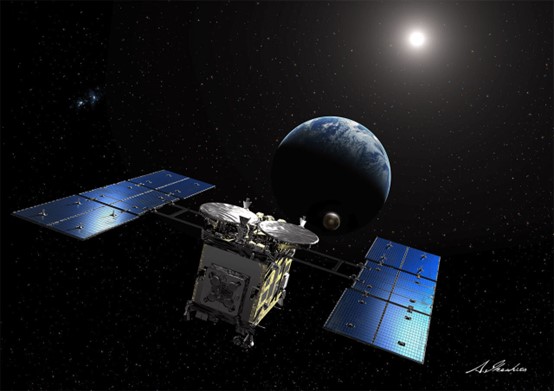
 Hayabusa 2 is the successor to the first
asteroid explorer Hayabusa, which visited the asteroid “Itokawa” and returned
with samples in 2010. In 2020, Hayabusa 2 has completed the first part of its
mission to touch down and retrieve samples from the C-type asteroid “Ryugu” in
order to elucidate the origins of the solar system – raw materials of evolution
and life. These precious samples are currently on their long journey back to
Earth.
Hayabusa 2 is the successor to the first
asteroid explorer Hayabusa, which visited the asteroid “Itokawa” and returned
with samples in 2010. In 2020, Hayabusa 2 has completed the first part of its
mission to touch down and retrieve samples from the C-type asteroid “Ryugu” in
order to elucidate the origins of the solar system – raw materials of evolution
and life. These precious samples are currently on their long journey back to
Earth.
Ryugu is a more primitive celestial body than the S-type asteroid Itokawa, and is thought to contain more organic compounds and hydrous minerals even though it is a similar rocky asteroid. It is believed that the minerals that make up the earth, the water of the sea, and the basic precursors to life had a close relationship in the primitive solar nebula at the beginning of the solar system.
Analysis of these unique samples will provide more knowledge about organic substances and water present in the small corner of space that is our solar system. This might be a key to help understand how these fundamental materials coexisted and interacted, helping us understand more about the origins of life.
It is truly an honor for the JASCO Group to be involved in this magnificent mission. We will continue to make contributions for the next generation using our advanced technologies.

According to the press release announcement from The Japan Aerospace Exploration Agency (JAXA) on 24th February, the results from their Analysis Team’s “Initial Analysis Organic Macromolecule Team” have been published in the American scientific Journal “Science”, on February 24, 2023 (JST).
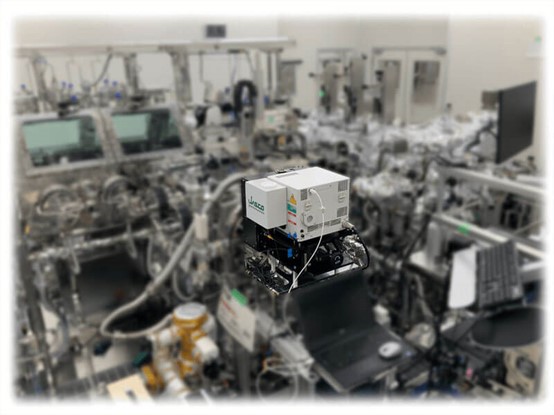
We are honor that our FT-IR microscope system FT/IR-6100 w/ IRT-5200 have contributed to analyze those sample in the part of this analysis project.
Paper title:Macromolecular organic matter in samples of the asteroid
(162173) Ryugu
Journal:Science
DOI:10.1126/science.abn9057